Problem
What made this hard
The existing setup required repeated saves and page changes. At enterprise scale, one channel can contain 10 to 40 sources, many views, and more than 100 fields, so continuity could not come at the cost of visibility.

Data platform · System design · 2025
Turn channel setup and multi source mapping into one continuous system.
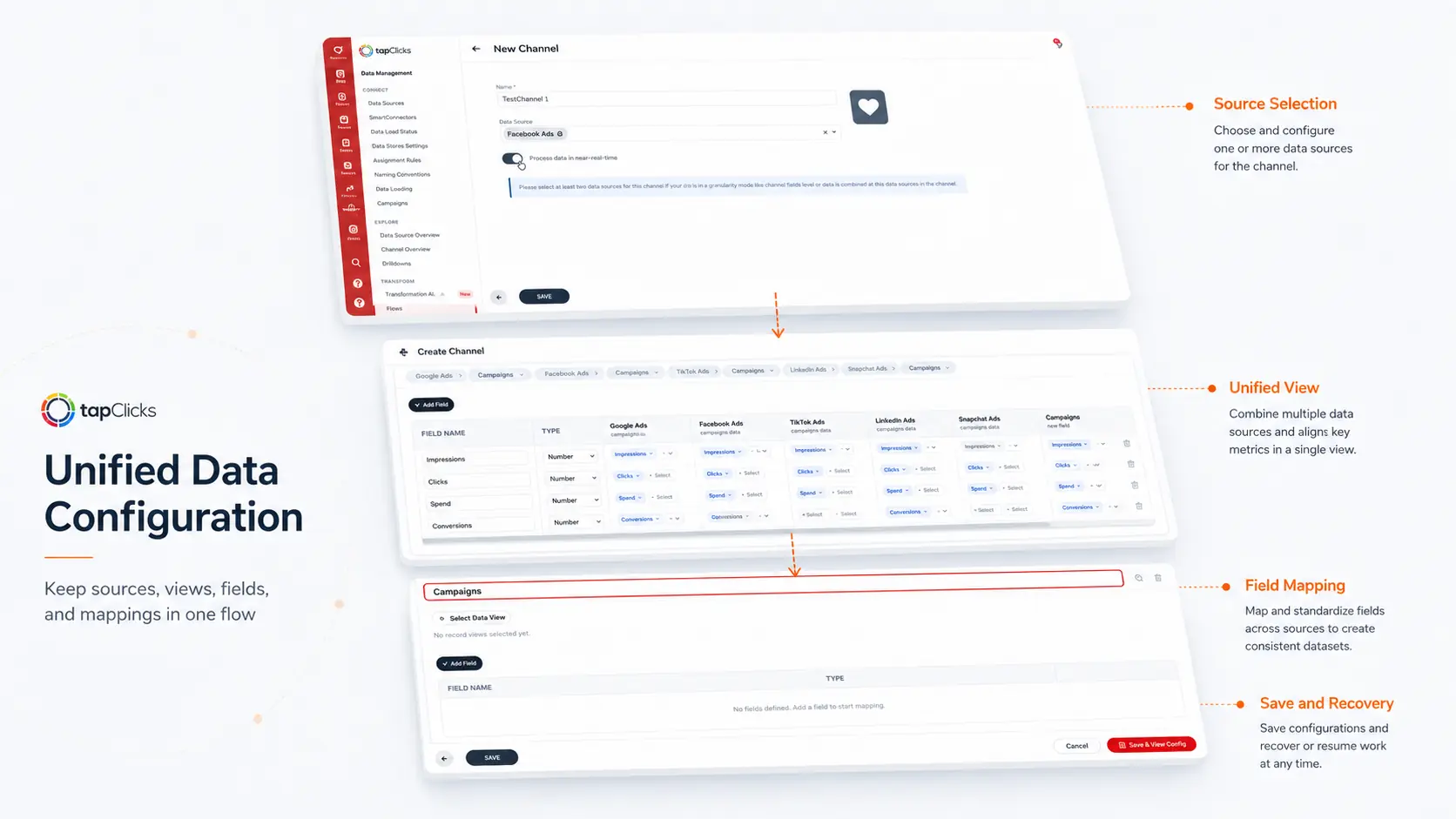
Problem
The existing setup required repeated saves and page changes. At enterprise scale, one channel can contain 10 to 40 sources, many views, and more than 100 fields, so continuity could not come at the cost of visibility.
Outcome
A single configuration workspace with one final save, inline creation, grouped mappings, sticky field context, and protection for unfinished work.
The thesis
Case-study proof
Enough context to judge the choice, inspect the work, and separate evidence from ambition.
Why this, not that
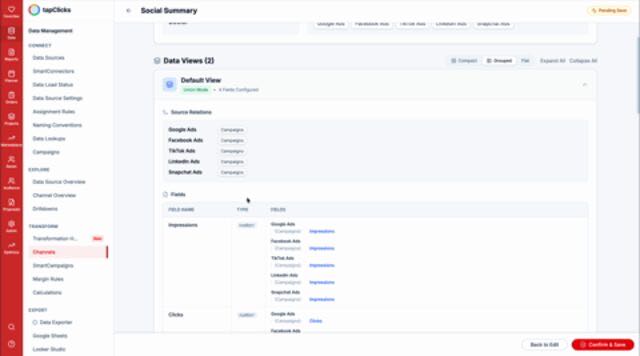
I grouped mappings around each unified field and kept its context sticky instead of sending administrators through separate source pages. That choice adds repetition at very large scale, but it makes every equivalent mapping auditable in one place.
Why this case is specific
The concept was stress-tested for enterprise channels with 10–40 sources, many views, more than 100 fields, and an existing minimum journey of three saves.
What you can inspect
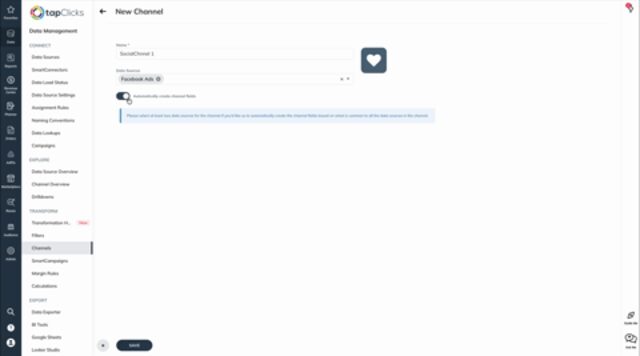
Validated prototype · product and iteration evidenceThe page shows the before-state save gate, the consolidated workspace, and field-centred grouping. It also records three iterations and clearly labels the work as a validated concept rather than a shipped product.
Decision to outcome
The selected model reduced the design target from at least three saves to one final save while preserving mapping visibility. It did not receive an engineering slot, so no launch or customer-impact metric is claimed.
Interface evidence
Design Iteration History · 3-Version Evolution
The workflow evolved through 3 distinct iterations based on stakeholder reviews with product managers and engineering lead feedback.
Configuration forced administrators through 3 distinct save gates across separate pages. Leaving the browser silently removed unsaved field mappings.
❌ Rejected: High context loss & repeated context switchingGrouped fields by connector source (Meta, Google, TikTok). Improved single-connector setup but required jumping across accordions to audit a single metric.
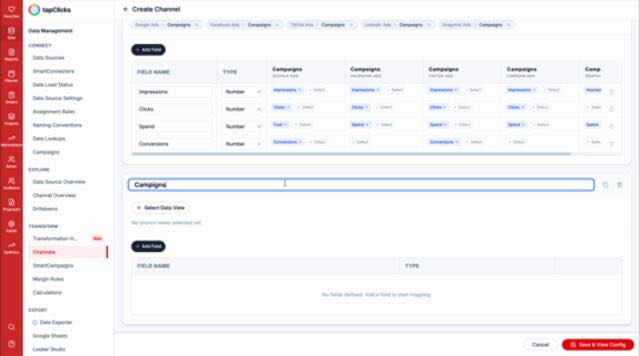
⚠️ Trade-off: Fast setup per source, hard to audit cross-source metricsGrouped mappings by unified field with sticky headers. Reduces 3 save steps down to 1 final save while keeping all 100+ fields auditable in one workspace.
✅ Selected: Validated by stakeholders for enterprise data auditabilityRelated configuration work · 2025
Replace repeated saves with one continuous setup flow.
The thesis
Problem
Creating one channel required repeated saves. Every Data View and Field created another loop, while leaving the page could silently remove unfinished changes.
Outcome
A validated single page concept with one final save, inline creation, grouping around fields, and protection for unfinished work. It did not receive an engineering slot, so I do not claim launch impact.
01 / Context
With no dedicated research or analytics function, product signals arrived through years of client feedback held by product managers. I audited areas with low adoption and visible friction, then made the repeated save cost concrete.
02 / Reframe
The brief asked for easier screens. I reframed it: how can a dense setup remain continuous and auditable without hiding the mappings administrators need?
03 / Evidence
A task audit exposed the minimum three save journey and every repeated loop. Recordings compared page jumps, context loss, and the proposed consolidated flow. Three built iterations captured how the direction changed with stakeholder input.
04 / Principle
Three rules guided the work.
05 / Choice
I grouped by field because auditing a metric was the more frequent job and every related source mapping stayed in one scannable block. The cost is more repetition for accounts with many sources, and the case study makes that tradeoff explicit.
06 / Evidence
Stakeholders validated the concept, but it did not ship before the project ended. The supported evidence is a design target of at least three saves reduced to one, three documented iterations, and no invented product metrics.
01 / Audit
The task audit revealed a minimum three save journey, repeated page changes, and the risk of losing unfinished configuration. I reframed the work around continuity, auditability, and recovery.
02 / Scale
I tested the structure with realistic connector and field counts, not tidy examples. That changed navigation, sticky context, collapse behaviour, and grouping decisions.
03 / Model
Each unified field has a common name and type, then maps to metrics within grouped source and view combinations.
04 / Guardrail
Mapping becomes available only after the channel and sources are defined. Disabled states explain what is missing, and leaving the workspace with unfinished work triggers protection.
05 / Evidence
Stakeholders validated the consolidated direction, but it did not receive an engineering slot. The supported evidence is a design target of three saves reduced to one, three documented iterations, and realistic testing at enterprise data scale.
Supporting evidence
Bring me the difficult part.
Complex workflows, AI trust, and enterprise systems.
Discuss a product challenge